AI in advertising
Your Ad Account Runs Itself Now. Here Is How to Stay the One Who Matters
Kailas Nath R and Kautilya Roshan
· 6 min read
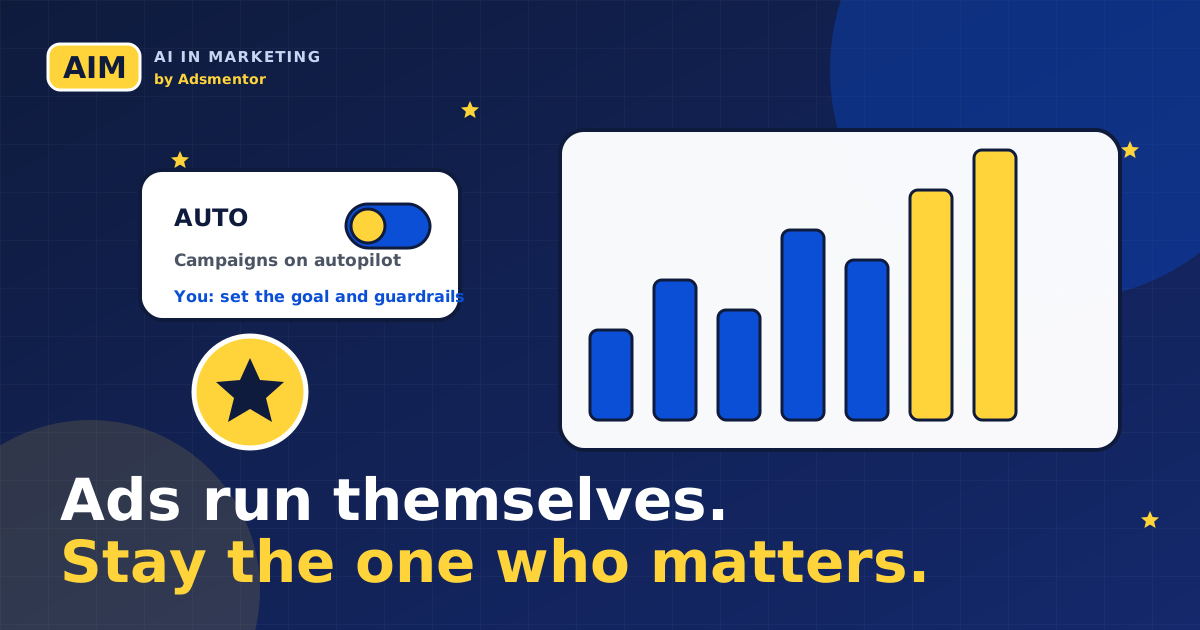
Ad platforms now make many decisions for you. Good news: the decisions that remain are the ones clients and employers value most, and you can learn them.
- Platform automation now handles targeting and bidding, so the value of a marketer has moved.
- Three things stay in your hands: the signal, the creative and the recommendations you accept.
- Marketers who understand these levers become more valuable, not less.
- You can practise all three inside real accounts before you ever manage a client budget.
Not long ago, running ads meant building audiences by hand: stack the interests, split the ad sets, set the bids. Today, automated campaign types such as Meta's Advantage+ and Google's Performance Max take a budget, a goal, some assets and a conversion signal, then choose the audience, placement and creative mix themselves.
A scenario worth knowing
Imagine a lead-generation account optimised for form submissions. Cost per lead falls week after week and the dashboard looks wonderful. Sales says the leads are junk. Nothing is broken. The platform did exactly what it was asked and found more people who fill in forms. If your conversion event counts every submission, the system learns to chase low-quality ones.
Lever one: the signal you feed it
Your conversion signal is now your targeting. When you send back what truly matters, such as qualified leads from your CRM, purchases or revenue, the system finds people like your real customers. What you gain: better leads, happier clients and a reputation as the person who saved the budget.
Lever two: the creative
When audiences are broad and automatic, the ad itself does the targeting. A message that speaks to a specific person attracts that person. What you gain: campaigns that stand out, and a skill that is hard to automate: knowing your customer well enough to say the right thing.
Lever three: the recommendations you choose to accept
Platforms suggest changes and sometimes auto-apply them, such as broader matching or bigger budgets. Some help, some mostly raise spend. What you gain: clients who trust you because you question suggestions instead of clicking "apply all".
A simple plan
- List your conversion events and ask: does each one represent real business value?
- Send back qualified leads, purchases or revenue, not only clicks and form fills.
- Plan creative as a test with clearly different angles, each with a written hypothesis.
- Let AI help you inspect the account for waste, and approve every change yourself. Our Meta Ads MCP and CLI usage SOP shows a safe way to do this with Meta's official tools.
- Set guardrails: budget caps, exclusions and brand rules.
This is what the ads module and the Performance and Growth specialisation at AIM are built around: working inside the ad platforms with AI as your assistant and you in charge of the result.
What has actually changed in ad platforms
Not long ago, a media buyer chose interests, set manual bids and split audiences into many ad sets. Today, platforms such as Meta Advantage+ and Google Performance Max take a goal and a budget and decide much of the rest. This is good news for the platforms and for beginners who no longer need to master dozens of settings. It also changes what clients pay for. They no longer pay for clicking buttons. They pay for judgement.
What to do with each lever, in practice
Signal: feed the system good data
- Check that purchases, leads or calls are tracked correctly and only once.
- Send the actions that matter to the business, such as qualified leads, instead of every form fill.
- Review tracking after every website change, because broken tags quietly waste budget.
Creative: give the system better material
- Produce a range of angles: price, proof, problem, emotion and social proof.
- Refresh creatives regularly, since ad fatigue arrives faster when automation spreads spend widely.
- Use AI to draft variations, then choose what fits the brand and remove what sounds generic.
Recommendations: accept some, question others
- Platforms suggest changes that often help the platform's revenue first. Read each one and ask what it does to your cost per result.
- Apply one change at a time so you can see what worked.
- Keep a log of accepted and rejected suggestions and the outcome of each.
A weekly routine that fits in two hours
- Monday, 30 minutes: check tracking and spend against plan.
- Tuesday, 45 minutes: review creative performance and brief new ideas.
- Thursday, 30 minutes: review platform recommendations and decide.
- Friday, 15 minutes: write a short note for the client: what changed, what you learned and what is next.
This routine is small enough for a freelancer with several clients and strong enough that clients feel looked after.
How this changes your career path
Jobs that were mostly button-clicking will shrink. Jobs that mix analysis, creative direction and client communication will grow. If you are early in your career, this is an opportunity: you can skip years of manual work and go straight to the part that gets people promoted. The trade-off is that you need to understand why things work, not just where to click.
Practise it before it is someone else's money
The Performance and Growth specialisation in AIM is built around exactly this: tracking, creative testing, reading automated campaigns and explaining results in plain language. With portfolio ad spend covered, you run live campaigns, not just exercises, and finish with results you can show.
See how you will learn to run automated campaigns
The syllabus shows how tracking, creative testing and campaign analysis are taught in the ads and Performance and Growth modules.
Part of the program: Performance and Growth. The full path is a flat ₹5,999, paid only after your onboarding call. See what is included.
The 12-week syllabus
Every module, what you build in each, and how the agency internship fits in. See the whole path before you spend a rupee.
Frequently asked questions
Are ad accounts really running themselves now?
Targeting and bidding are increasingly automated, but strategy, tracking, creative and approval of changes still need a person.
Do I still need to learn manual campaign setup?
Yes. Understanding how settings work helps you judge what automation is doing and fix it when results slip.
What is the most valuable skill in paid ads now?
Feeding platforms good data, producing strong creative and interpreting results for clients.
Can a beginner manage automated campaigns?
With the right foundations and supervised practice, yes. Start with small budgets and a clear test plan.
About the authors

Digital marketing and agentic AI consultant at Big Stone Agency and trainer in the AIM program. Co-author of The Ad Account Nobody Shows You.

Generative AI engineer, LinkedIn Top Voice, consultant and trainer. Co-author of The Ad Account Nobody Shows You.
More from the blog
- Duolingo's AI-First Memo, 18 Months On: What Its Own Filings Show
- A Prompt Framework for Marketers: RTCROS, With Examples You Can Copy
- Meta Ads MCP and CLI: A Step-by-Step Usage SOP for Marketers
- Best Digital Marketing Course in India (2026): AI and Vibe Marketing Compared
- The ₹2.4 Lakh Mistake: Who Really Owns Your Ad Account?
- The Ad Account Nobody Shows You: Social Ads Zero to Pro (2026 Edition)
- What Is Vibe Marketing? Get a Week of Work Done in an Afternoon
- Before You Pay for an AI Marketing Course, Ask These 7 Questions
- Fewer Clicks, Same Customers: Stay Visible in the Age of AI Answers
- Agentic AI Can Give You Your Evenings Back (If You Learn It First)
- 6 AI Advertising Mistakes That Can Cost You a Client (and the Easy Fixes)